Understanding retaining wall drainage in Armadale
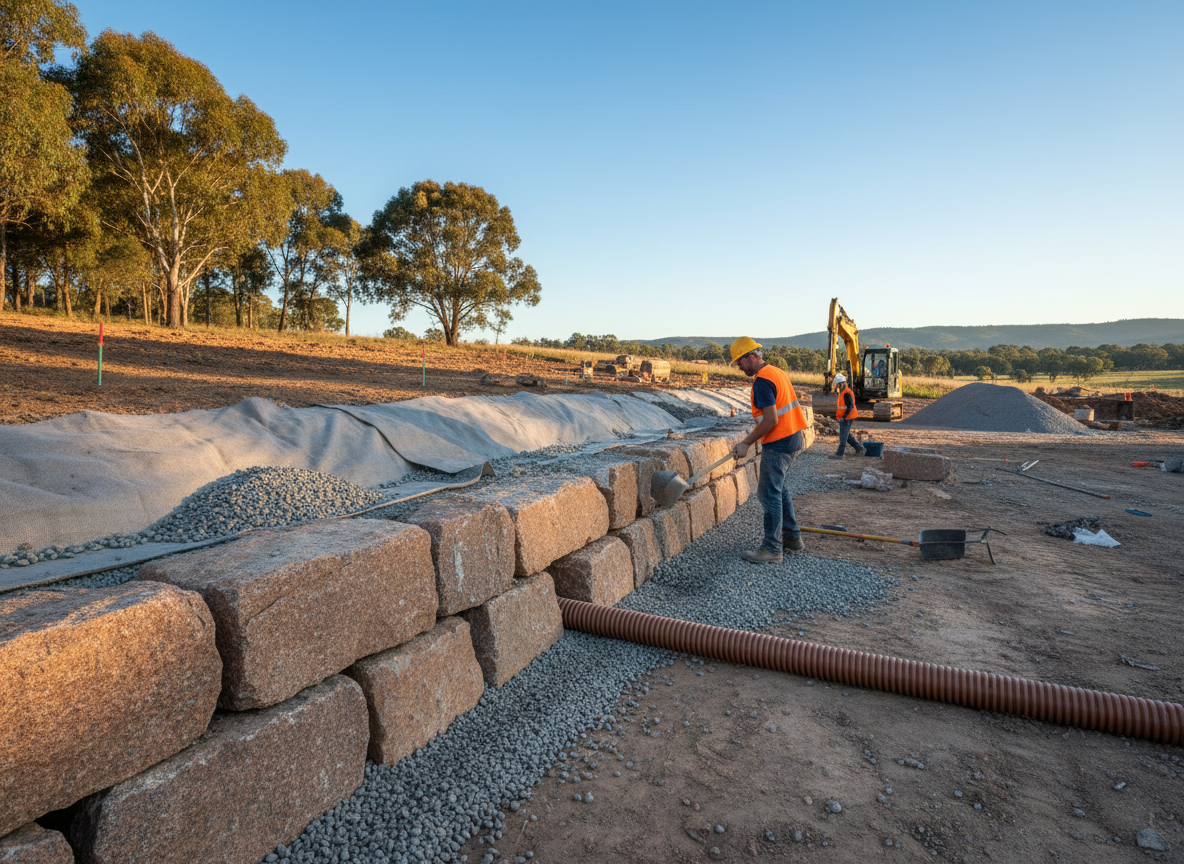
Almost every wall that holds back soil needs a planned path for water. The usual setup is a slotted ag pipe along the base, clean aggregate packed behind the wall, geofabric to stop fine soil clogging the stone, and a pipe run to a set discharge point.
Signs water is trapped behind your wall
Watch for puddles along the top after rain, damp patches or seepage through joints, white staining on the face and soil washing out at the base. A wall that leans further or bulges after each wet winter is usually carrying water pressure it was never built to hold.
How clay and sandy ground affect drainage
Reactive clay holds water, swells when wet and shrinks as it dries, so pressure on the wall rises and falls through the year. Sandy ground drains quickly but can wash through gaps and undermine the base. Geofabric and free-draining aggregate keep soil in place while water moves out.
Why drainage decides how long a wall lasts
Drainage is the part of a wall most often skipped, yet it does the quiet work year after year. A dry backfill keeps pressure low, so the wall stays plumb, footings stay firm and the face avoids staining, cracking and early failure.
Drainage items a quote should list
Ask for each part by name: the ag pipe size and length, the aggregate size and volume, the geofabric type, and exactly where the pipe discharges. A quote that just says "drainage included" leaves you no way to compare it with another price.
Where should the water from behind the wall go?
Water needs to leave at a suitable outlet on your own property, such as a stormwater point or soakwell, agreed before digging starts. It should never be pushed onto a neighbour's land. On a boundary wall, talk with the neighbour early about the discharge route.
Next step: note where the water collects
Walk the wall after rain and mark where water pools, seeps or stains, then note the wall type, its height and what sits above it. Send those notes through the form to request a quote; a licensed and insured local contractor can follow up.
Retaining Wall Drainage Services We Offer
✓Drainage for New Walls
Ag pipe, aggregate and geofabric placed as the wall goes up, with the discharge route agreed before excavation.
✓Drainage Behind Existing Walls
Adding or renewing drainage behind a wall that already holds water, which usually means opening up the backfill behind it.
How it works
- 1
Find where water collects
After rain, look along the top, face and base of the wall for pooling, seepage, staining or soil washing out.
- 2
Check the wall and ground
Note the wall type, its height, what sits above it and whether the ground is clay or sand, since each changes the drainage needed.
- 3
Agree the parts and outlet
Settle on the ag pipe, aggregate, geofabric and a discharge point on your own block before any digging begins.
- 4
Compare itemised quotes
Line up written quotes part by part so you can see which ones include full drainage and which leave it vague.