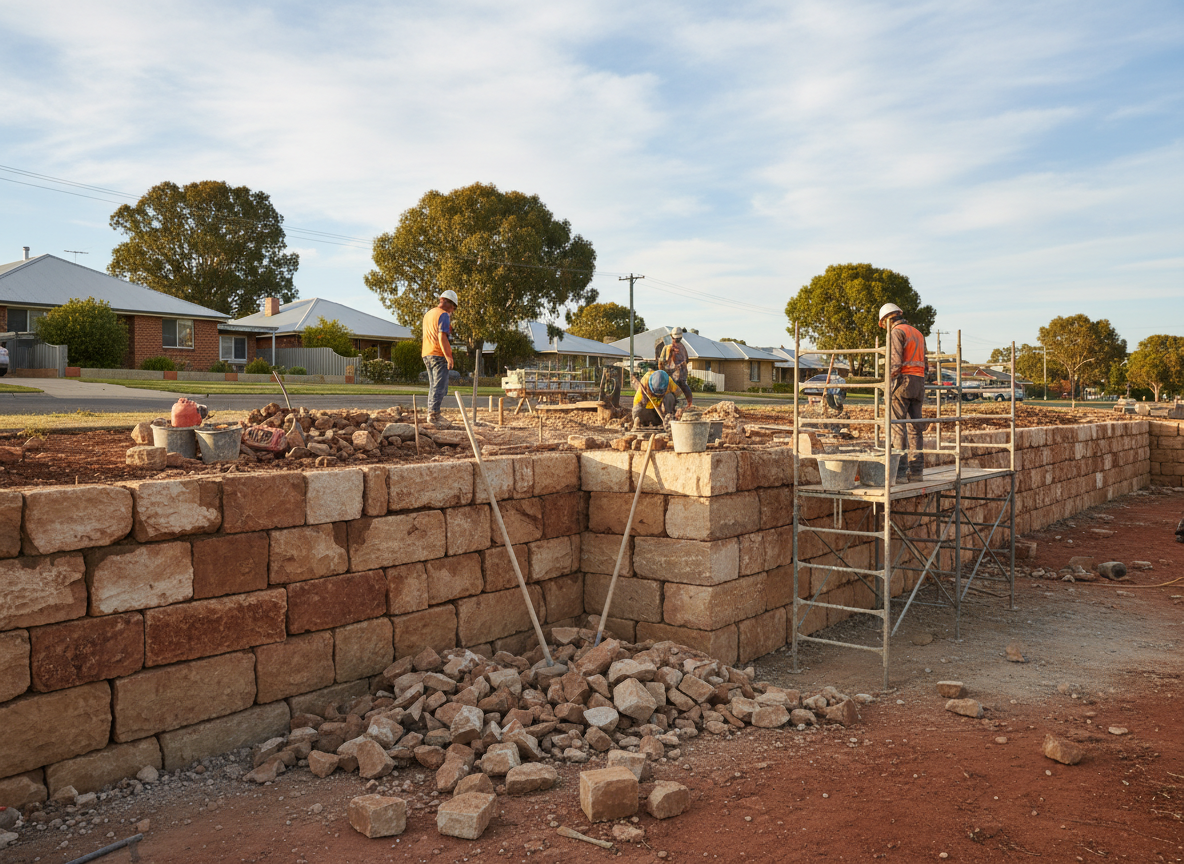
Who retaining wall repair suits in Armadale
Many leaning, cracked or bulging walls can be repaired once the cause is found. Repair suits walls where damage is limited and the structure is still sound. Where a wall has moved a long way or its footing has failed, rebuilding is usually the safer path.
Warning signs a retaining wall is failing
Look for the top of the wall tilting forward, cracks that widen over time, a bulge in the face, gaps between blocks or sleepers, and soil washing through joints. Water pooling behind the wall or a damp, stained face are early signs worth noting too.
Why retaining walls fail on sandy and reactive clay ground
The usual culprit is water. When drainage behind a wall blocks or was never built, the soil grows heavy and pushes harder. Sand can wash out from under footings, while reactive clay swells when wet and shrinks when dry, working a wall loose. Loads above, such as a driveway, add pressure.
Repair versus replacement for a leaning wall
Repair tends to make sense when cracks are minor, the wall is still close to upright and drainage can be cleared or added. Replacement is worth weighing when the lean is obvious, the footing has shifted, timber has rotted, or one section keeps failing after earlier fixes.
Why patching cracks alone rarely lasts
Filling a crack hides the symptom but leaves the pressure behind the wall unchanged. If water or soil movement caused it, the crack usually reopens or a new one appears nearby. A lasting repair deals with the cause, which often means better drainage or reinforcing the section that moved.
What a stable repaired wall gives you
A sound result stands upright, lets water escape through working drainage and stays put through wet winters and dry summers. The garden, driveway or fence above stays supported, and the ground below is safe to use again.
Failing walls on a property line
When the damaged wall sits on a boundary, raise it with your neighbour early. Who built it and whose soil it holds back can both affect who pays, so it is worth getting advice before anyone agrees to split repair costs.
Next step for a leaning or cracked wall
Note the wall's rough length and height, which section is moving and whether water collects behind it. Photograph the lean from the side and the cracks up close, then check again after heavy rain. That record shows whether movement is ongoing and helps you weigh repair against a full rebuild.
Retaining Wall Repair Services We Offer
✓Drainage Repair
Clearing or adding drainage behind a wall that holds water, easing the pressure that causes leaning and cracking.
✓Section Rebuild
Taking down and rebuilding the part of a wall that has moved or broken, while keeping sound sections in place.
✓Full Wall Replacement
Removing a wall that is beyond repair, such as rotted timber or a failed footing, and building a new one.
How it works
- 1
Describe the problem
Share photos or a description of the lean, cracks or water, plus the wall's rough length and height.
- 2
Find the cause
The wall, drainage, soil and any loads above are checked to work out why it is moving.
- 3
Choose repair or rebuild
Compare a targeted repair against replacing the wall, based on how far it has moved and its condition.
- 4
Get a written quote
Receive a written quote covering the agreed fix, including any drainage work, so you can decide with confidence.